
Creamy Cheesecake Without the Oven 🧀 🍰
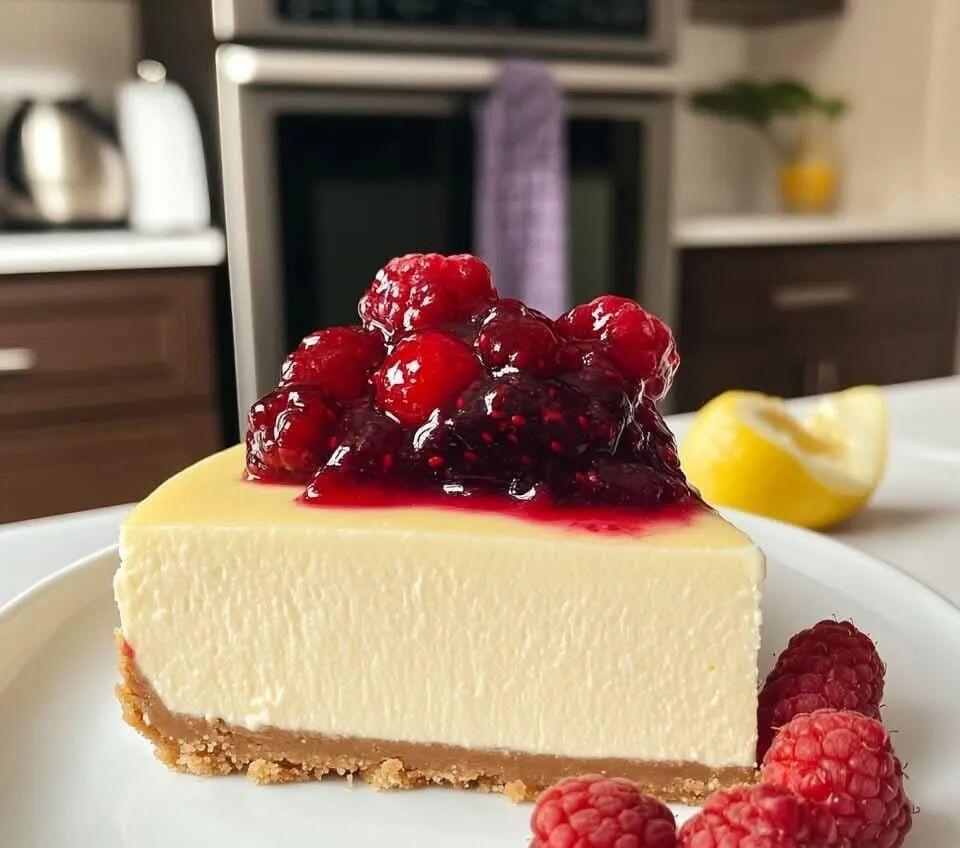
📝 Ingredients:
Bottom material
-200 g of digestive biscuits
-100 g melted butter
Stuffing
-400 g of cream cheese
-200 ml whipped cream
-100 g of sugar
-1 teaspoon vanilla extract
-10 g of gelatin powder
-50 ml of hot water
-The peel of 1 lemon
Ingredients
-200 g red berry jam (optional)
🔔 Description:
Step 1: Prepare the base material.
-Crush the cookies in a food processor until fine.
-Mix crushed biscuits with melted butter until smooth.
-Press the mixture into the bottom of a spring mould pan to form a bottom layer. Place it in the refrigerator to chill while preparing the filling.
Step 2: Prepare the filling
-In a large bowl, whisk the cream cheese with the sugar and vanilla extract until smooth and creamy.
-In a separate bowl, beat the cream until soft peaks form.
-Dissolve gelatin powder in hot water and stir well.
-Add the dissolved gelatin to the cream cheese mixture and mix well.
-Add the lemon zest, then gently pour the whipped cream into the cream cheese mixture.
Step 3: Assemble the cake
-Pour the filling onto the cookie bottom in the cake tin.
-Use a spatula to smooth the surface and chill in the refrigerator for at least 4 hours until the cake is firm.
Step 4: Add ingredients
-If desired, after the pie has hardened, add red berry jam on top before serving.
Preparation time: 20 minutes ■ Cooldown: 4 hours ■ Total time: 4 hours 20 minutes ■ Serving: 8 servings
🖤 Black and purple cake 🍰
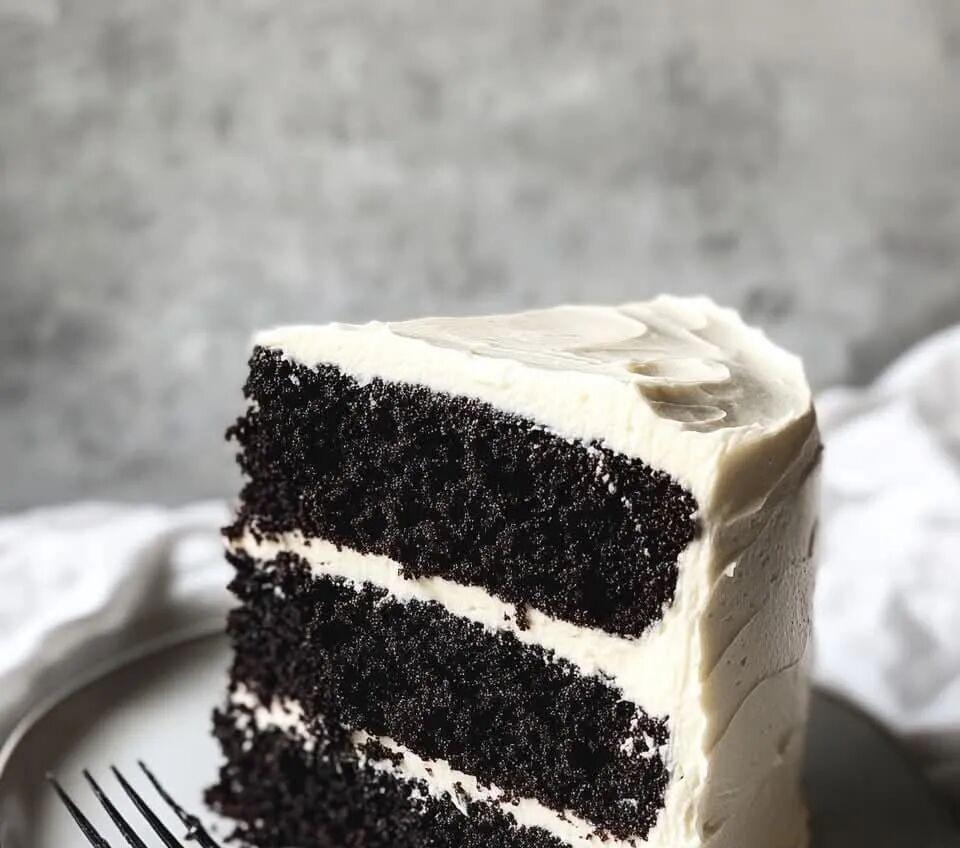
📝 Ingredients:
-250 g wheat flour
-50 g sugar-free cocoa powder
-300 g of sugar
-1 tsp baking soda
-½ teaspoon salt
-240 ml of vegetable oil
-240 ml buttermilk
-2 large eggs
-1 teaspoon vanilla extract
-1 tsp white vinegar
-120 ml of boiling water
Make frosting
-250 g cream cheese, room temperature
-100 g butter, room temperature
-400 grams of rock sugar
-1 teaspoon vanilla extract
-2 tablespoons sugar-free cocoa powder (optional, for chocolate frosting)
🔔 Description:
Step 1: Prepare the cake mix.
-Oven preheat: Preheat the oven to 175 °C. Grease and flour two 20 cm round cake tins.
-Combine the dry ingredients: In a large bowl, sift in the flour, cocoa powder, sugar, baking soda and salt. Mix well.
-Add wet ingredients: add oil, buttermilk, eggs, vanilla extract and vinegar. Stir until thoroughly combined.
-Add boiling water: Carefully add boiling water to the mixture and stir until smooth. The batter will be in a liquid state.
Step 2: Baking
-Pour in the batter: Pour the batter evenly into the two prepared pans.
-Bake: Bake for 30-35 minutes, or until there is no problem inserting it through the middle with a toothpick. Cool in the pan for 10 minutes, then remove and place on a grid rack to cool completely.
Step 3: Prepare frosting
-Beat cream cheese and butter: In a large bowl, beat cream cheese and butter until smooth and creamy.
-Add rock sugar: Add a little rock sugar each time, and beat well after each addition. If desired, add vanilla extract and cocoa powder and mix well.
Step 4: Assembly
-Glaze the cake: Once the cake layers have cooled completely, place one of them on a plate and apply some frosting. Place the second layer on top and cover the entire cake with the remaining frosting.
Preparation time: 20 minutes | Cooking time: 35 minutes | Total time: 55 minutes | Portions: 10


🍩 Milk doughnut 🍩
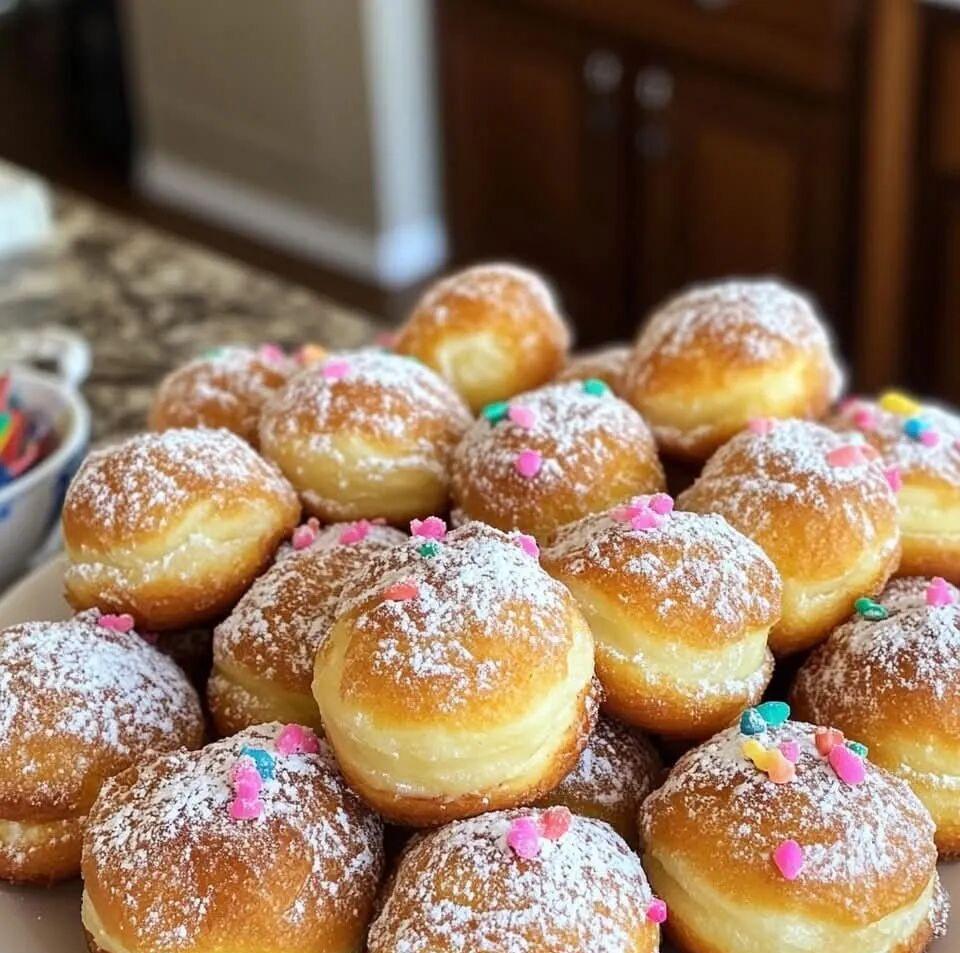
📝 Ingredients:
-250 ml warm milk
-100 g of sugar
-10 g of fresh yeast
-1 egg
-50 g butter, melted
-500 g wheat flour
-1 pinch of salt
-Frying oil
-Rock sugar (for sprinkle)
🔔 Description:
Step 1: Prepare the dough.
-Mix yeast: In a large bowl, add warm milk, sugar and fresh yeast. Let stand for 10 minutes until bubbly.
-Add ingredients: Add eggs, melted butter and salt to the milk mixture. Mix well.
-Add the flour: Gradually add the wheat flour and mix until the dough is smooth and even.
Step 2: Kneading and waking dough
-Knead the dough: Remove the dough to the floured surface and knead for about 10 minutes until elastic.
-First yeast rise: Place the dough in an oiled bowl, cover with a cloth, and let it sit in a warm place for 1 hour, or until the dough is double its size.
Step 3: Make donuts
-Molding: After the dough wakes up, gently beat it down to defoam it. Use a rolling pin to roll out the dough until it is about 1 cm thick. Use a donut knife or two round dies to cut out shapes.
-Secondary fermentation: Place the donuts on a floured tray, cover and proof for 30 minutes.
Step 4: Deep-fry doughnuts
-Heat oil: Heat enough oil to 180 °C in an oil pan.
-Fry the donuts: Place the donuts in hot oil and fry for about 2-3 minutes on each side until golden brown. Remove and place on oil absorbent paper.
Step 5: Garnish and Serve
-Sprinkle sugar: Once the donuts have cooled, sprinkle them with rock sugar before serving.
Prep Time: 20 minutes | Cook Time: 15 minutes | Total Time: 1 hour 35 minutes | Per serving: 12 donuts
[Warm Tips]
When making Western-style pastries, commonly used cups and tablespoon/teaspoon are standard units of capacity, which are mainly used to measure the volume of ingredients, rather than directly expressing weight. To convert these capacities to grams (g), it needs to be calculated based on the density of the specific ingredient, because the weight of different ingredients varies greatly.
Here are the approximate weights of some common ingredients for reference:
Cup Weight Conversion
1 cup = about 240 milliliters (mL), but the number of grams depends on the ingredients:
all-purpose flour: 1 cup ≈ 120-130 g (depending on the degree of compaction)
granulated sugar: 1 cup ≈ 200 g
brown sugar: 1 cup ≈ 220 g (lightly pressed)
butter: 1 cup ≈ 227 g
milk: 1 cup ≈ 240 g
water: 1 cup ≈ 240 g
Spoon weight conversion
1 tablespoon (tablespoon, tbsp) = 15 ml
Flour: 1 tablespoon ≈ 8-10 g
White sugar: 1 tablespoon ≈ 12.5 g
Cream: 1 tablespoon ≈ 14 g
Water: 1 tablespoon ≈ 15 g
1 teaspoon (teaspoon, tsp) = 5 ml
Flour: 1 teaspoon ≈ 3-4 g
White sugar: 1 teaspoon ≈ 4 g
Salt: 1 teaspoon ≈ 6 g
vanilla extract: 1 teaspoon ≈ 5 g
Notes
Status of ingredients: For example, whether the flour is sifted and whether the sugar is compacted will affect the weight.
Precise measurement: If the recipe calls for precision, it is recommended to use an electronic scale to weigh directly, rather than relying entirely on cups or spoons.
Regional differences: This refers to the standard cup (240 mL) commonly used in the United States, other regions (such as Australia, 1 cup = 250 mL) may vary slightly.


