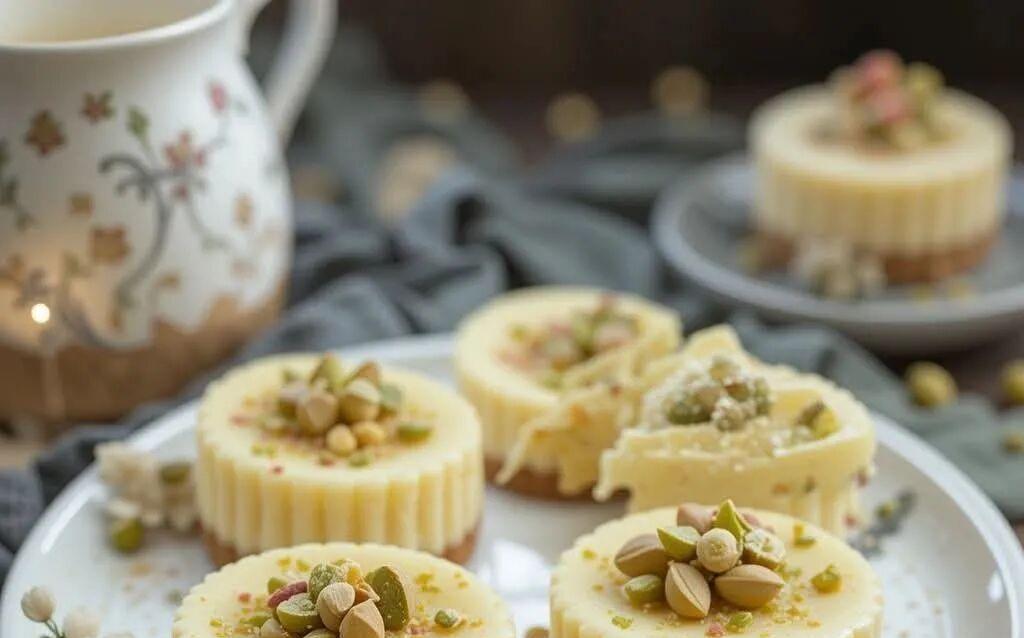
White Chocolate and Pistachio Mini Cheesecake
Ingredients
Bottom material
-150 g digestive biscuits or maria biscuits
-50 g melted butter
Stuffing
-200 g room temperature cream cheese
-80 g of sugar
-100 grams of melted white chocolate
-1 egg
-1 teaspoon vanilla extract
-50 grams of chopped pistachios
decorate
-Chopped pistachios
-White chocolate chips
Preparation
1. Preheat oven to 160 °C and place muffins in a muffin tin.
2. Grind the cookies into powder and mix with the melted butter. Spread the mixture into a muffin tin and press evenly to form a base.
3. In a bowl, beat together the cream cheese and sugar until smooth. Add the melted white chocolate, eggs, and vanilla extract and beat until well combined.
4. Stir in the chopped pistachios, then spread the mixture onto the cookie base.
5. Bake for 18-20 minutes until slightly firm in the center.
6. Cool to room temperature, then chill in the refrigerator for at least 3 hours.
7. Garnish with more pistachio chops and white chocolate shavings before serving.
Please indulge in the perfect combination of these mini cheesecakes.
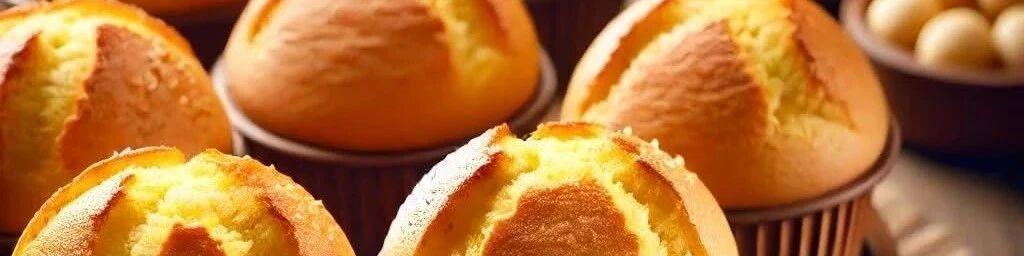
Mini coconut cake

Ingredients
-150 g wheat flour
-100 g coconut puree
-100 g of sugar
-1 tsp baking powder
-1 pinch of salt
-2 eggs
-100 ml coconut milk
-50 g melted butter
-1 teaspoon vanilla extract
Preparation
1. Preheat oven to 180 °C and grease cupcakes or mini cake tins.
2. Combine flour, coconut, baking powder and salt in a bowl.
3. In a separate bowl, beat the eggs with the sugar until bubbly. Add the coconut milk, melted butter, and vanilla extract.
4. Gradually add the dry ingredients to the liquid mixture and stir until smooth.
5. Divide the mixture into molds and fill them three-quarters.
6. Bake for 18 to 20 minutes until there is no odor when inserted through the middle with a toothpick.
7. After cooling, demould and serve.
You can decorate with more shredded coconut or a light glaze.
* Coffee and Baileys custard * ☕ 🍸 🍮

* Ingredients: *
-1 cup of espresso
-1/2 cup Baileys
-1 can of condensed milk
-1 can of evaporated milk
-4 eggs
-1 cup sugar (for caramel)
-1 teaspoon vanilla extract
Description:
1. * Prepare caramel: * Preheat oven to 180 °C. Melt the sugar in a saucepan until caramel forms. Pour the caramel into the fran mold.
2. * Whisk ingredients: * In a blender add coffee, Baileys, condensed milk, evaporated milk, egg and vanilla extract and mix well.
3. * Baking: * Pour the mixture into the mold with the caramel. Place the molds in a saucepan with water and bake for 60 minutes until set.
4. * Cool and serve: * Cool and unmold and serve.
Enjoy this unique floret! 😋 🍮
[Warm Tips]
When making Western-style pastries, commonly used cups and tablespoon/teaspoon are standard units of capacity, which are mainly used to measure the volume of ingredients, rather than directly expressing weight. To convert these capacities to grams (g), it needs to be calculated based on the density of the specific ingredient, because the weight of different ingredients varies greatly.
Here are the approximate weights of some common ingredients for reference:
Cup Weight Conversion
1 cup = about 240 milliliters (mL), but the number of grams depends on the ingredients:
all-purpose flour: 1 cup ≈ 120-130 g (depending on the degree of compaction)
granulated sugar: 1 cup ≈ 200 g
brown sugar: 1 cup ≈ 220 g (lightly pressed)
butter: 1 cup ≈ 227 g
milk: 1 cup ≈ 240 g
water: 1 cup ≈ 240 g
Spoon weight conversion
1 tablespoon (tablespoon, tbsp) = 15 ml
Flour: 1 tablespoon ≈ 8-10 g
White sugar: 1 tablespoon ≈ 12.5 g
Cream: 1 tablespoon ≈ 14 g
Water: 1 tablespoon ≈ 15 g
1 teaspoon (teaspoon, tsp) = 5 ml
Flour: 1 teaspoon ≈ 3-4 g
White sugar: 1 teaspoon ≈ 4 g
Salt: 1 teaspoon ≈ 6 g
vanilla extract: 1 teaspoon ≈ 5 g
Notes
Status of ingredients: For example, whether the flour is sifted and whether the sugar is compacted will affect the weight.
Precise measurements: If the recipe calls for precision, it is recommended to use an electronic scale to weigh directly, rather than relying entirely on cups or spoons.
Regional differences: This refers to the standard cup (240 mL) commonly used in the United States, other regions (such as Australia, 1 cup = 250 mL) may vary slightly.