
Kiwi Cheesecake
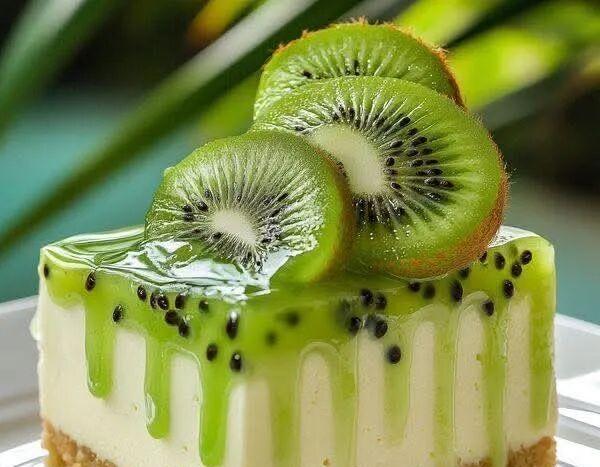
Base material ingredients
-200 g Maria biscuits
-80 g melted butter
Filling ingredients
-400 g of cream cheese
-200 ml whipped cream
-100 g of sugar
-5 grams of gelatin powder or 3 sheets
-1 teaspoon vanilla extract
-2 ripe kiwis, peeled and crushed
Ingredients
-2 or 3 peeled and sliced kiwis
-100 ml of water
-50 g of sugar
-3 grams of gelatin powder or 2 sheets
Production instructions
1. Crush the cookies, mix with the melted butter, press into the bottom of a spring form baking pan and refrigerate.
2. Follow the package directions to add gelatin to the filling.
3. Beat cream cheese with sugar and vanilla until smooth.
4. Whip the cream and add it to the cream cheese.
5. Add kiwi fruit puree and dissolved gelatin and stir well.
6. Pour the mixture over the bottom layer and chill in the refrigerator for at least 4 hours.
7. Heat water and sugar together until dissolved, add hydrated gelatin, and leave warm.
8. Place the kiwi slices on the cheesecake, then pour the gelatin on top.
9. Place in the refrigerator for another 1 to 2 hours until the filling is firm.

Passion fruit cake with jam (Dulce de Leche)
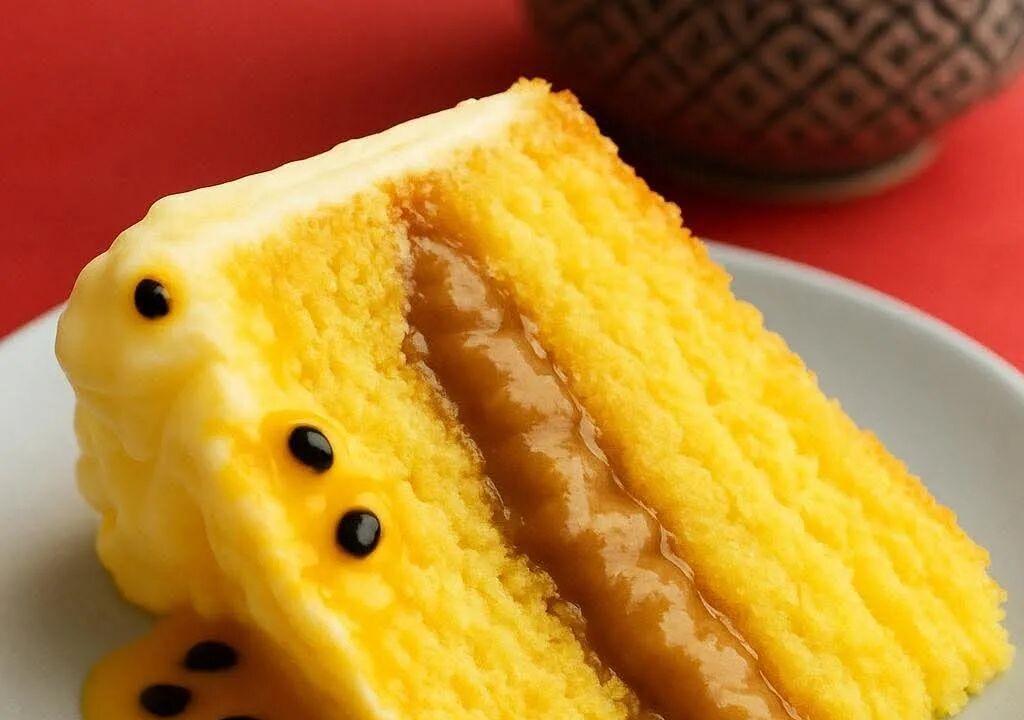
📋 Ingredients
🔸 Sponge cake:
-4 hard proteins
-4 egg yolks
-1/2 cup refined sugar
-2 cups wheat flour
-1 tablespoon baking powder
🔸 Passion Fruit Mousse
-1 can of condensed milk
-1 passion fruit flesh or 1/2 cup juice concentrate
-1 small box of cream
🔸 Jam:
-1 can of condensed milk (for pressure cooker cooking).
🔸 The syrup to moisten the cake:
-1 cup of milk
-1/2 cup water
-Condensed milk or sugar
👨 🍳 Preparation method
🔹 Passion Fruit Mousse:
-Whisk the condensed milk, passion juice and cream until creamy.
-Chill in the refrigerator to make it firm.
🔹 Dulce de Leche:
-Cook a can of condensed milk in a pressure cooker for 35 minutes, completely adding water.
-Cool completely before turning on.
🔹 Sponge cake:
-Whisk the egg yolk well with the sugar until light and fluffy.
-Gently add egg whites until firm.
-Add sifted flour and baking powder and mix carefully until the batter is smooth.
-Pour the batter into the oiled and floured cake tin.
-Place in a preheated oven to 180 °C and bake for about 35 minutes (test with a toothpick).
Syrup
-Whisk milk, water and condensed milk or sugar until slightly sweet.
-Moisten the cooled sponge cake with this mixture.
🔹 Assembly:
-Cut the sponge cake in half.
-Moisten the cake halves with syrup.
-Fill it with jam.
-Cover with the passion fruit mousse.
-Finish with a drizzle of whipped cream and, if desired, a little sweetened passion fruit sauce on top.
Serve chilled and indulge in this delicious cake!

Mango passion fruit mousse with mirror glaze and flower and fruit decoration
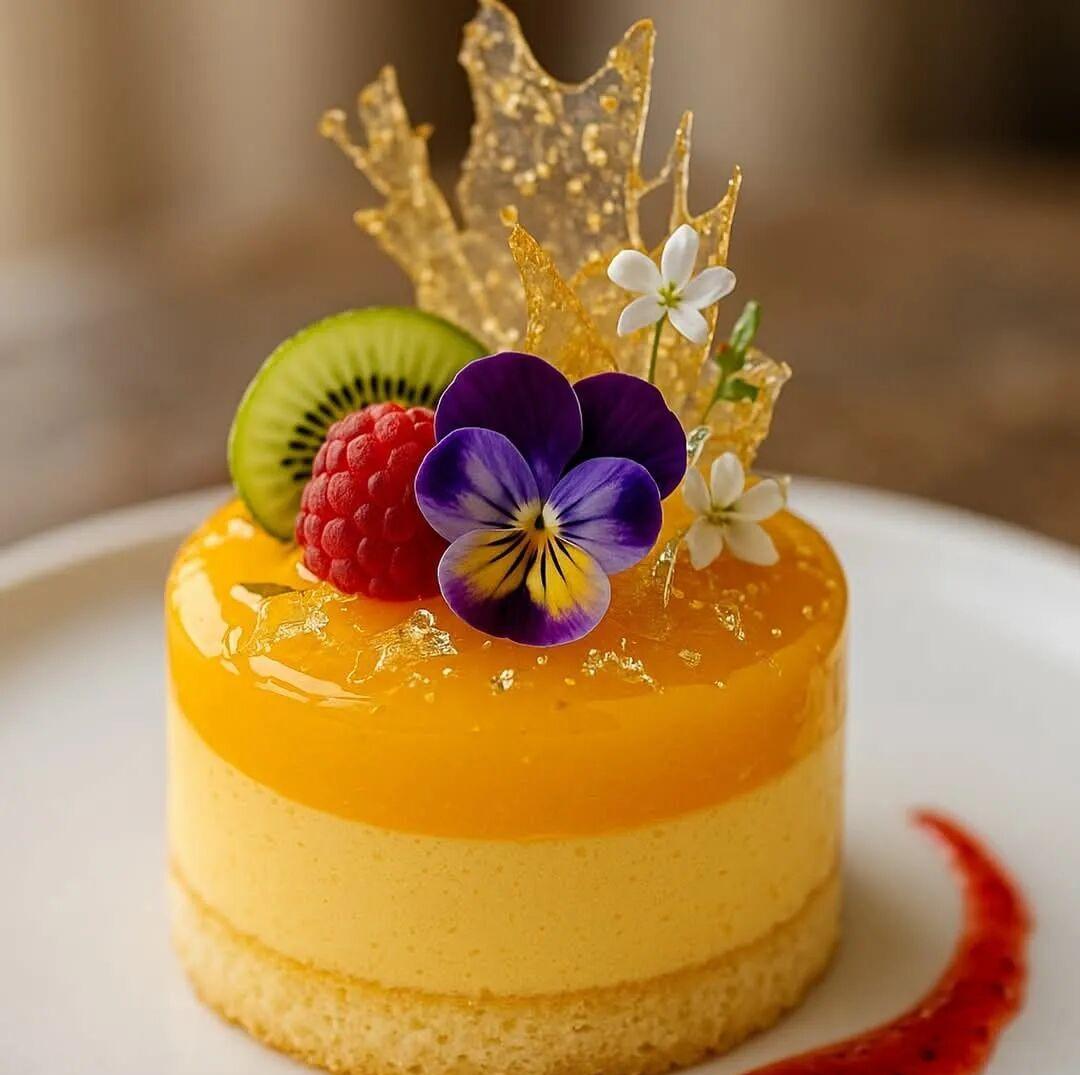
Ingredients (for 6 people)
Sponge cake base
-2 eggs
-60 g of sugar
-60 g wheat flour
-1 teaspoon vanilla extract
Making Mango Passion Fruit Mousse
-250 g of mango pulp
-100 g of passion fruit flesh (natural or frozen sugar-free)
-300 ml of whipped cream (not less than 35 fat content)
-100 g of sugar
-6 g tasteless gelatin (3 sheets or 1 pack)
-50 ml of cold water
Making Passion Fruit Mirror Glaze
-100 ml of filtered passion juice
-80 g of sugar
-2 g hydrated tasteless gelatin
-1 tsp lemon juice
decorate
-Thinly sliced kiwi fruit
-Fresh raspberries
-Edible flowers (pansies, violets)
-Caramel foil (optional)
-Edible gold foil (optional)
-Red fruit jam (strawberry puree + sugar)
Preparation
1. Sponge cake:
-Beat eggs with sugar to triploid volume.
-Add the sifted flour.
-Pour into a thin cake tin and bake at 180 °C for 10-12 minutes.
-Cut out a round shape of the same size as the individual die for spare.
2. Mango Passion Fruit Mousse
-Soak gelatin in cold water.
-Heat the pulp slightly with sugar to dissolve the gelatin.
-Cool to room temperature.
-Beat the cream into a medium firm foam, then mix with the fruit in a wraparound fashion.
-Pour into molds, place on the sponge cake and freeze for at least 3 hours.
3. Mirror glaze:
-Heat the passion juice with the sugar and lemon juice.
-Add hydrated gelatin and stir until dissolved.
-Let cool slightly and pour over frozen mousse.
4. Decoration:
-Unmold the mousse and decorate with fresh fruit, edible flowers and crunchy elements.
-Drizzle with red fruit sauce when serving.
[Warm Tips] When making Western-style pastries, commonly used cups and tablespoon/teaspoon are standard units of capacity, which are mainly used to measure the volume of ingredients, rather than directly expressing weight. To convert these capacities to grams (g), it needs to be calculated based on the density of the specific ingredient, because the weight of different ingredients varies greatly.
Here are the approximate weights of some common ingredients for reference:
Cup Weight Conversion
1 cup = about 240 milliliters (mL), but the grams depend on the ingredients:
all-purpose flour: 1 cup ≈ 120-130 g (depending on the degree of compaction)
granulated sugar: 1 cup ≈ 200 g
brown sugar: 1 cup ≈ 220 g (lightly pressed)
butter: 1 cup ≈ 227 g
milk: 1 cup ≈ 240 g
water: 1 cup ≈ 240 g
Spoon weight conversion
1 tablespoon (tablespoon, tbsp) = 15 ml
Flour: 1 tablespoon ≈ 8-10 g
White sugar: 1 tablespoon ≈ 12.5 g
Cream: 1 tablespoon ≈ 14 g
Water: 1 tablespoon ≈ 15 g
1 teaspoon (teaspoon, tsp) = 5 ml
Flour: 1 teaspoon ≈ 3-4 g
White sugar: 1 teaspoon ≈ 4 g
Salt: 1 teaspoon ≈ 6 g
vanilla extract: 1 teaspoon ≈ 5 g
Notes
Status of ingredients: For example, whether the flour is sifted and whether the sugar is compacted will affect the weight.
Precise measurement: If the recipe calls for precision, it is recommended to use an electronic scale to weigh directly, rather than relying entirely on cups or spoons.
Regional differences: This refers to the standard cup (240 mL) commonly used in the United States, other regions (such as Australia, 1 cup = 250 mL) may vary slightly.
END


